
How Agarwood Is Used in Fragrance, Wellness & Culture
Introduction: Why Agarwood Has Never Been “Just a Material”
Agarwood has endured across centuries not because it was traded, but because it was used.
Long before modern markets, agarwood played an essential role in how people:
- Scented their bodies and spaces
- Grounded themselves emotionally and spiritually
- Marked rituals, hospitality, and transitions
Understanding how agarwood is used — rather than how it is priced — reveals why it continues to matter today.
1. Agarwood in Fragrance: Depth That Cannot Be Synthesised
In the fragrance world, agarwood is commonly known as oud.
It is prized not for volume, but for qualities that are extremely difficult to replicate:
- Deep, woody warmth
- Smoky, resinous complexity
- Evolving scent profiles over time
Each piece of agarwood smells slightly different, which is why it is often used sparingly — as a foundation note that gives fragrance depth and longevity.
In modern perfumery, agarwood bridges:
- Traditional incense culture
- Contemporary niche and luxury fragrance
- Personal expression and memory
Agarwood is not loud — it is lasting.
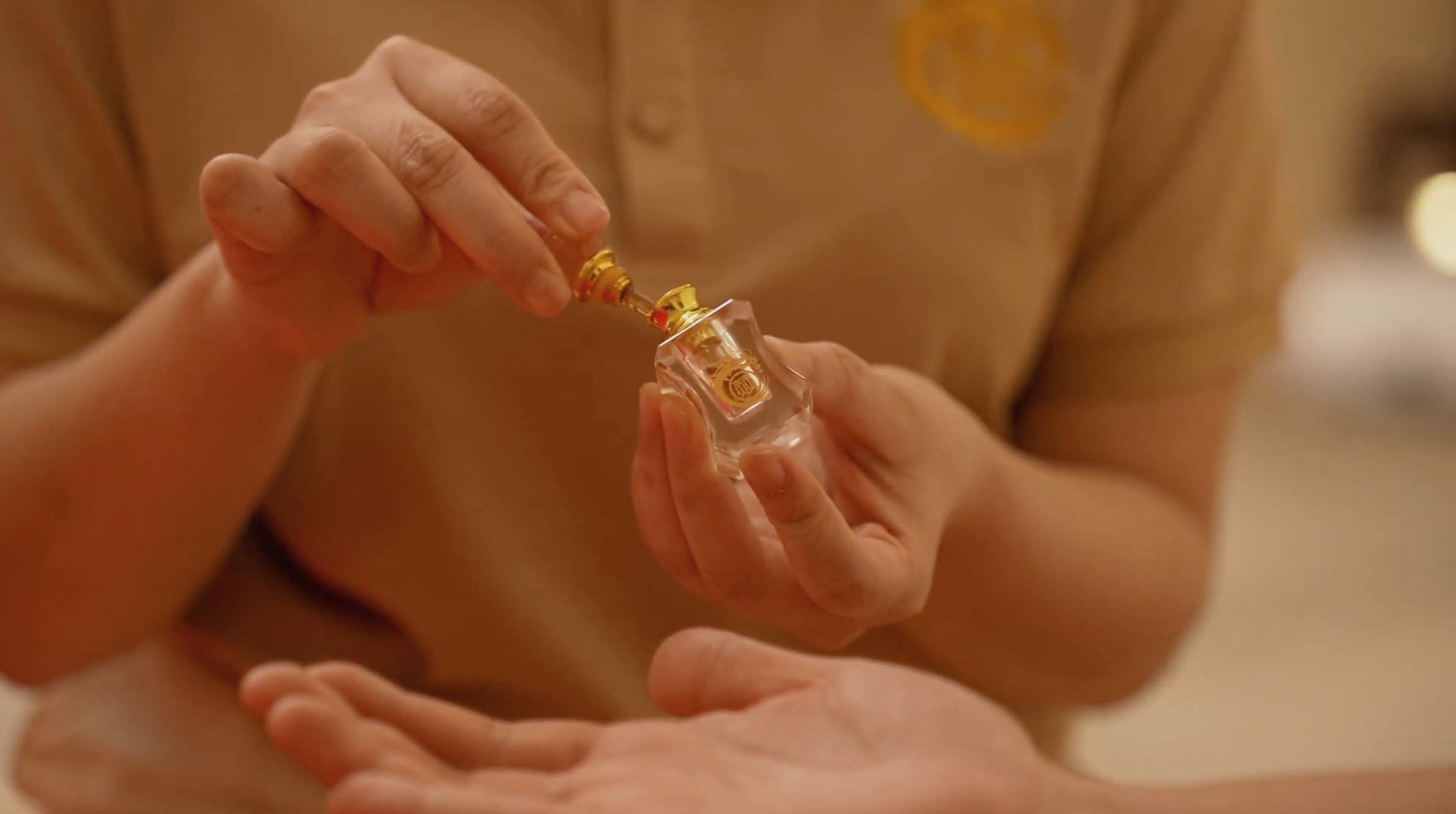
2. Agarwood Oil (Oud Oil): Concentrated Time
When agarwood is distilled into oil, the result is one of the most concentrated natural aromatic substances in the world.
Oud oil is valued because:
- It carries years of biological transformation in a single drop
- It changes on skin over time
- No two distillations are exactly alike
Because of its intensity, oud oil is often used:
- In small quantities
- In bespoke or artisanal blends
- As a personal scent rather than a mass product
This scarcity is not engineered — it is inherent.
3. Agarwood in Traditional Wellness Practices
Across Asia and the Middle East, agarwood has long been associated with emotional grounding and inner calm.
Traditionally, it has been used to:
- Create a calming atmosphere
- Support meditation and reflection
- Encourage balance of body and mind
In modern wellness contexts, agarwood is appreciated not as a “treatment”, but as a sensory anchor — something that slows the breath, focuses attention, and connects people to the present moment.
4. Agarwood in Cultural & Spiritual Rituals
Agarwood has played a sacred role in many cultures:
- Burned as incense during ceremonies
- Offered in temples and sacred spaces
- Used to welcome guests or mark significant life events
Its fragrance was believed to:
- Purify space
- Carry intention
- Bridge the material and spiritual worlds
Because of this, agarwood was never consumed casually.
It was reserved, respected, and ritualised.
5. Why Demand for Agarwood Persists Today
Modern demand for agarwood continues — not because of hype, but because its uses remain relevant.
Today’s interest is driven by:
- A renewed appreciation for natural materials
- Desire for authenticity in fragrance and wellness
- Cultural reconnection in a fast-paced world
- Resistance to synthetic sameness
Agarwood offers something increasingly rare:
depth, imperfection, and time made tangible.
6. Use Creates Meaning — Not the Other Way Around
It is important to understand this distinction:
Agarwood is valuable because it is used meaningfully —
it is not used because it is valuable.
When agarwood is reduced to a price chart or yield estimate, its essence is lost.
When it is understood through its applications — scent, calm, ritual, memory — its relevance becomes clear.
Conclusion: A Living Material, Not a Market Trend
Agarwood continues to exist across fragrance, wellness, and culture because it aligns with something deeply human:
- The need to slow down
- The desire for depth
- The search for meaning beyond efficiency
Agarwood does not follow trends. It follows time.
For those drawn to agarwood today, understanding how it has been used across cultures is often the most meaningful place to begin.


